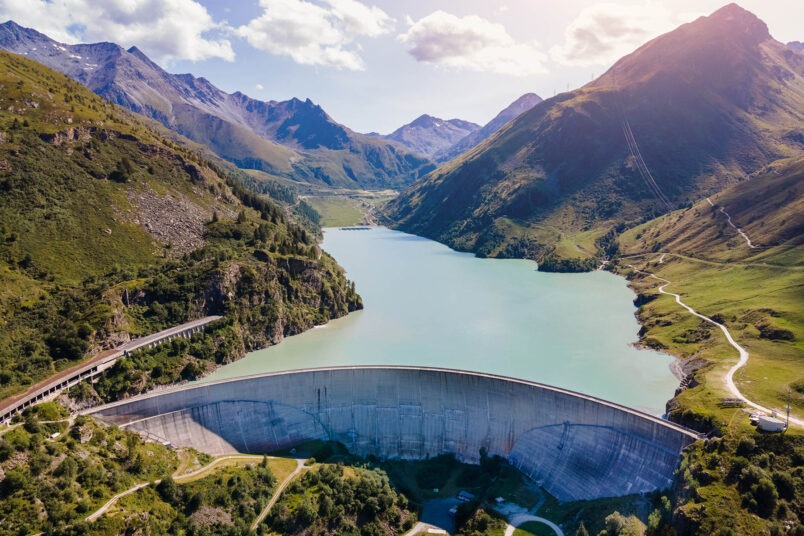
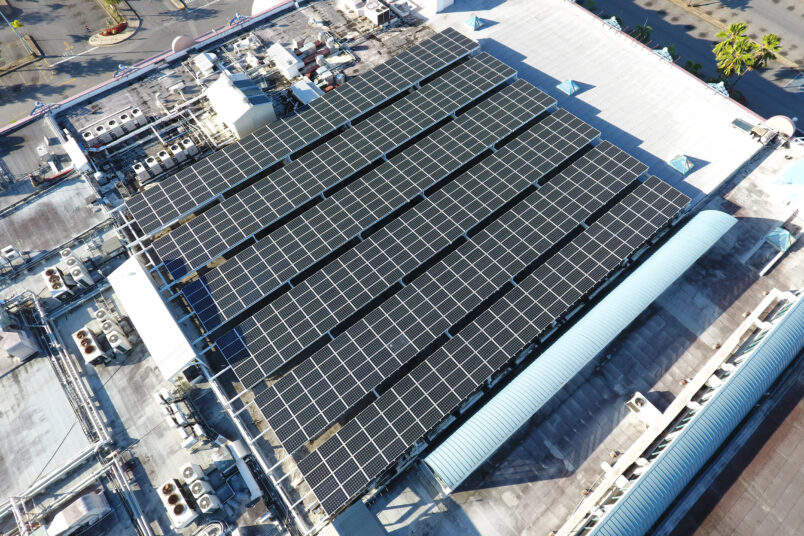
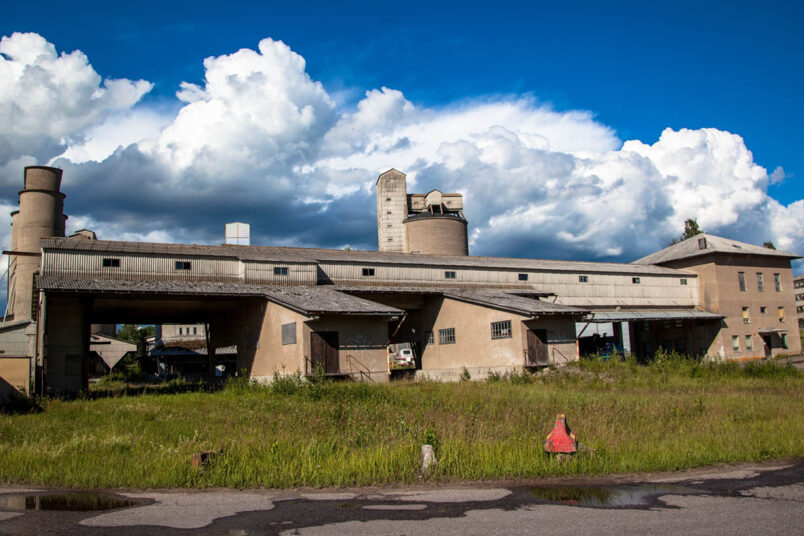
A sustainable real estate project requires an equally sustainable planning foundation—one that strikes a balance between social, economic, and environmental interests. Public authorities play a central role in this process: through zoning and land-use planning, they establish the framework within which such projects can be developed in the first place. At the same time, experience shows that the complexity and diversity of legitimate requirements are constantly increasing. However, this presents not only challenges but also opportunities for cooperative and forward-looking spatial planning.
Key Trends in Spatial Planning
With the revision of the Spatial Planning Act effective May 1, 2014, decisive guidelines were established: urban development should occur inward, land should be used sparingly, and urban sprawl should be limited. The transformation of existing sites, the densification of residential neighborhoods, and the consideration of climate-related requirements—such as reducing heat islands or implementing the “sponge city” concept—have been central to these efforts ever since.
These objectives have become established and now form a common foundation for public authorities and private actors. Their concrete implementation opens up scope for innovative solutions and collaborative approaches that go beyond traditional planning mechanisms.
The Path to a Planning Framework for a Sustainable Project
Traditional, government-led planning remains an indispensable tool for safeguarding overarching interests. At the same time, it is evident that sustainable projects are particularly successful when cooperative elements are additionally integrated into the planning process.
This is where a more dialogue-oriented approach comes into play: authorities, investors, and future users are involved in the development at an early stage. Projects are made transparent early on, feedback is gathered, and—where appropriate—incorporated into the planning framework. This upstream coordination can enhance the quality of planning, reduce conflicts, and improve the efficiency of formal procedures.
This results in clear added value for public authorities: planning gains broader support, acceptance increases, and the risk of objections or delays decreases. At the same time, the public sector’s steering function is preserved.
Another advantage lies in the content of the planning guidelines. If these do not consist solely of detailed individual specifications but focus more on objectives and guidelines, this creates room for project-specific and innovative solutions. Authorities can thus ensure their strategic goals—such as in the areas of climate protection or mobility—are met without unnecessarily restricting concrete implementation.
For example, sustainable mobility concepts, open-space designs, or energy supply solutions can be developed through dialogue, ensuring that both ecological requirements and economic viability are taken into account. This increases the likelihood that projects will not only be approved but also actually implemented.
Conclusion
Sustainable spatial planning offers the opportunity not only to balance different interests but also to specifically integrate them. Authorities benefit from greater planning certainty, broader acceptance, and more efficient procedures. Investors and developers gain the necessary flexibility for economically viable projects, while social and environmental concerns are effectively integrated. Through the interplay of clear strategic guidelines and cooperative planning processes, a win-win situation is created for all stakeholders.
We support local communities in developing forward-looking and sustainable spatial planning tools, as well as investors and developers in advancing and safeguarding their interests within the framework of zoning and land-use planning (e.g., design plans, neighborhood plans, special-use plans, etc.)
Arbeitsrechtlicher Kündigungsschutz bei Krankheit in der Schweiz – Grundsätzliches und Aktuelles, in: Beate Gsell/Thomas Rüfner/Ulrike Babusiaux (Hrsg.), Die unverzichtbare Wissenschaft – The Indispensable Science, Festschrift für Wolfgang Ernst zum 70. Geburtstag, Tübingen 2026, S. 693 ff. (gemeinsam mit Wolfgang Portmann)
Restrictions on the Right to Strike in Switzerland, in: Bernd Waas (Hrsg.), Restrictions on the Right to Strike, International Law and National Laws in Europe, Netherlands 2025, S. 429 ff. (gemeinsam mit Wolfgang Portmann)
Das Arbeitszeugnis in der Schweiz – Grundzüge und ausgewählte Fragen, in: Labour and Law passing across 21st century, Liber Amicorum Costas Papadimitriou, Athen 2025 (gemeinsam mit Wolfgang Portmann)
Der Weiterbeschäftigungsanspruch bei rechtswidriger Kündigung im öffentlichen Personalrecht, in: ARV 2024, S. 241 ff.
Covid-19-Rechtsprechung – Ein Überblick aus arbeitsrechtlicher Sicht, in: Jusletter vom 5. August 2024 (gemeinsam mit Roger Rudolph)
ZPO-Revision: Auswirkungen auf den Arbeitsprozess, in: Domink Bopp/Alexander Kistler/Natalie Lisik/Kristof Reber (Hrsg.), Der Prozess, Analysen und Perspektiven von Assistierenden des Rechtswissenschaftlichen Instituts der Universität Zürich (APARIUZ XXIV), Zürich 2024, S. 37 ff. (gemeinsam mit Helin Dalla Palma)
Die privatrechtliche Rechtsprechung des Bundesgerichts im Jahr 2022, Arbeitsrecht, in: ZBJV 2023, S. 314 ff. (gemeinsam mit Roger Rudolph)
Verlängerung der Probezeit bei Krankheit, Besprechung des Entscheids des Bundesgerichts 8C_317/2021 vom 8. März 2022, I. sozialrechtliche Abteilung, auszugsweise amtlich publiziert in BGE 148 III 126, in: ARV 2022, S. 378 ff. (gemeinsam mit Wolfgang Portmann)
So nicht!, Das Bundesgericht setzt der Zürcher Verwaltungsgerichtspraxis zur Evidenztheorie in personalrechtlichen Kündigungsstreitigkeiten Grenzen, in: Ein Kunstflug durch das Recht und die Governance, Festschrift zum 65. Geburtstag von Roland Müller, Zürich/St. Gallen 2021, S. 35 ff. (gemeinsam mit Roger Rudolph)
Vortrag: «Rechtswidrige Kündigungen – Anspruch auf Weiterbeschäftigung», gehalten am 7. Dezember 2023 an der Tagung zum öffentlichen Personalrecht der Universität St. Gallen
ADVOTECH ADVOKATEN, (the «Firm», hereinafter also «we», «us») is a law firm located in Basel.
In the course of our business activities, we collect and process personal data, i.e. information that relates to an identified or identifiable natural person. This includes, in particular, personal data about our clients, associated persons, counterparties, courts and authorities, experts, business partners, correspondent law firms, professional and other associations, visitors to our websites, participants in events, recipients of newsletters and other bodies or, in each case, their contact persons and employees as well as our employees (hereinafter also referred to as «you»). In this Privacy Statement, we inform you about these data processing activities.
In addition to this Privacy Statement, we may inform you separately about the processing of your data (e.g. in the context of forms or contractual terms).
If you disclose data to us about other persons (e.g. family members, agents, counterparties or other associated persons), we will assume that you are authorised to do so and that this data is correct and that you have ensured that these persons are informed about this disclosure, insofar as a legal duty to inform applies (e.g. by bringing this Privacy Statement to their attention in advance).
2. WHO CONTROLS THE PROCESSING OF YOUR DATA?
The persons responsible for the processing described in this Privacy Statement under data protection law are:
3. FOR WHAT PURPOSES DO WE PROCESS WHICH OF YOUR DATA?
When you use our services, visit our websites «https://advotech.ch» and «https://swiss-energy-forum.ch» (hereinafter referred to as «Websites»), or otherwise deal with us, we collect and process various categories of your personal data. In principle, we may collect and otherwise process this data for the following purposes in particular:
Communication: We process personal data so that we can communicate with you and with third parties, such as parties to proceedings, courts or authorities, by e-mail, telephone, letter or otherwise (e.g. to answer inquiries, in the context of legal advice and representation, as well as the initiation or execution of contracts). This also includes that we can send our clients, contractual partners and other interested persons information about events, changes in the law, news about our Firm or similar. This may take the form of newsletters and other regular contacts (by electronic means, post, telephone). You can refuse such communication at any time or refuse or revoke your consent to such communication. For this purpose, we process in particular the content of the communication, your contact data and the marginal data of the communication (this content may also include audio recordings, for example if you leave us a voice message by telephone). If we need or want to establish your identity, we will collect additional data (e.g. a copy of an identity document).
Initiation and conclusion of contracts: With regard to the conclusion of a contract, such as in particular a contract for the establishment of a client-lawyer relationship, with you or your client or employer, which also includes the clarification of any conflicts of interest, we may in particular collect and otherwise process your name, contact data, authority/powers of attorney, declarations of consent, information about third parties (e.g. contact persons, family details and counterparties), contract contents, date of conclusion, creditworthiness data and all other data that you provide to us or that we collect from public sources or third parties (e.g. commercial register, credit agencies, sanctions lists, media, legal protection insurance or the Internet).
Administration and processing of contracts: We collect and process personal data so that we can comply with our contractual obligations towards our clients and other contractual partners (e.g. suppliers, service providers, correspondent law firms, project partners) and, in particular, so that we can provide and demand the contractual services. This also includes the data processing for the management of mandates (e.g. legal advice and representation of our clients before courts and authorities and correspondence) as well as the data processing for the enforcement of contracts (debt collection, legal proceedings, etc.), accounting and public communication (if permitted). For this purpose, we process in particular the data which we receive or have collected in the course of the initiation, conclusion and execution of the contract, as well as data which we generate in the course of our contractual services or which we collect from public sources or other third parties (e.g. courts, authorities, counterparties, information services, insurance companies, media, detective agencies or from the Internet). Such data may include, in particular, interview, meeting and consultation transcripts and minutes, notes, internal and external correspondence, contractual documents, documents that we create and receive in the course of proceedings before courts and authorities (e.g. statements of claim, appeals and complaints, orders, judgments and decisions), background information about you, counterparties or other persons, as well as other mandate-related information, performance records, invoices, and financial and payment information.
Operation of our Websites: In order to operate our Websites in a secure and stable manner, we collect technical data, such as IP address, information about the operating system and settings of your device, region, time and type of use. We also use cookies and similar technologies. For more information, see section 8.
Improvement of our electronic offers: In order to continuously improve our websites and other electronic offers, we collect data about your behaviour and preferences by analysing, for example, how you navigate through our Websites and how you interact with our social media profiles.
Registration: In order to use certain offers and services (e.g. free WLAN, newsletter), you must register (directly with us or via our external login service provider). For this purpose, we process the data disclosed during the respective registration. Furthermore, we may also collect personal data about you when you use the offer or service; if necessary, we will provide you with further information about the processing of this data.
Security purposes: We collect and process personal data to ensure and continuously improve the appropriate security of our IT and other infrastructure. This includes, for example, monitoring and controlling electronic access to our IT systems as well as physical access to our premises, analysis and testing of our IT infrastructure, system and error checks and the creation of security copies.
Adherence to laws, directives and recommendations from authorities and internal regulations («Compliance»): We collect and process personal data to comply with applicable laws (e.g. anti-money laundering, tax obligations or our professional duties), self-regulations, certifications, industry standards, our «corporate governance» and for internal as well as external investigations (e.g. by a law enforcement or regulatory agency or an appointed private entity) in which we are a party (to the proceedings).
Risk management and management of our Firm: We collect and process personal data in the context of risk management (e.g. to protect against criminal/tortious activities) and the management of our Firm. This includes, among other things, our operational organisation (e.g. resource planning) and the development of our Firm.
Job application: If you apply for a job with us, we collect and process the relevant data for the purpose of reviewing the application, conducting the application process and, in the case of successful applications, for the preparation and conclusion of a corresponding contract. For this purpose, in addition to your contact data and the information from the corresponding communication, we also process in particular the data contained in your application documents and the data that we can additionally collect about you, for example, from employment-related social networks, the Internet, the media and from references, if you consent to us obtaining references.
Employment relationship: If you are in an employment relationship with us, we process your data for the purpose of implementing the employment relationship. For this purpose, in addition to your contact data and the information from the application process, we process the information required for maintaining the personnel file and for the implementation of the respective employment relationship, in particular with regard to professional requirements, permits, good conduct, information on children, payment details, insurance, social security, work models, organisation, deployment planning, work recording, accounting, authority/powers of attorney, signatory powers, security, responsibility, risk management, working atmosphere, work equipment, home office, customer contacts, events, occasions, website, communication, correspondence, absences (in particular vacations, maternity, illness, accident, military, sabbaticals), secondary employment, offices held, education and training, career structure, reference letters, performance and conduct, disciplinary measures, labour disputes and procedures, etc. Data processing in connection with the employment relationship may be the subject of additional separate Privacy Statements.
Other purposes: Other purposes include, for example, education and training purposes and administrative purposes (e.g. accounting). We may follow or record telephone or video conferences for training, evidence and quality assurance purposes. In such cases, we will notify you separately (e.g. by displaying a notice during the video conference in question) and you are free to tell us if you do not wish to be recorded or to terminate the communication (if you only do not wish your image to be recorded, please turn off your camera). In addition, we may process personal data for the organisation, implementation and follow-up of events, such as in particular lists of participants and the content of presentations and discussions, but also image and audio recordings made during these events. Other purposes cannot be named exhaustively and also include the protection of other legitimate interests.
4. WHERE DOES THE DATA COME FROM?
From you: The majority of the data we process is provided by you (or your device) (e.g. in connection with our services, the use of our Websites, or communication with us). You are not obliged to disclose your data, with exceptions in some cases (e.g. legal obligations). However, if you wish to conclude contracts with us or use our services, for example, you must provide us with certain data. The use of our Websites is also not possible without data processing.
From third parties: We may also collect or receive data from publicly available sources (e.g. debt collection registers, land registers, commercial registers, media or the Internet including social media) from (i) public authorities, (ii) courts, (iii) your employer or client who either has a business relationship with us or is otherwise involved with us, as well as from (iv) other third parties (e.g. clients, counterparties, legal protection insurers, credit agencies, address dealers, associations, contractual partners, Internet analysis services). This includes, in particular, the data that we process in connection with the initiation, conclusion and execution of contracts, as well as data from correspondence and discussions with third parties, but also all other categories of data pursuant to section 3.
5. TO WHOM DO WE DISCLOSE YOUR DATA?
In connection with the purposes listed in section 3, we transfer your personal data in particular to the categories of recipients listed below. If necessary, we obtain your consent for this or have our supervisory authority release us from our professional secrecy.
Service providers: We work with service providers in Switzerland and abroad who process data they have received from us or collected for us (i) on our behalf (e.g. IT providers), (ii) jointly with us or (iii) on their own responsibility. These service providers include, for example, IT providers, banks, insurance companies, debt collection agencies, credit agencies, address checkers, other law firms or consulting firms. We generally agree on contracts with these third parties regarding the use and protection of personal data.
Clients and other contractual partners: First of all, this refers to clients and other contractual partners of ours for whom the transfer of your data results from the contract (e.g. because you work for a contractual partner or he or she provides services for you). This category of recipients also includes bodies with which we cooperate, such as other law firms in Switzerland and abroad or legal protection insurance companies. The recipients generally process the data under their own responsibility.
Authorities and courts: We may disclose personal data to offices, courts and other authorities in Switzerland and abroad if this is necessary for the fulfilment of our contractual obligations and in particular for the conduct of our mandate, or if we are legally obliged or entitled to do so, or if this appears necessary to protect our interests. These recipients process the data under their own responsibility.
Counterparties and persons involved: If necessary for the fulfilment of our contractual obligations, in particular for the management of the mandate, we also disclose your personal data to counterparties and other involved persons (e.g. guarantors, financiers, affiliated companies, other law firms, informants or experts, etc.).
Other persons: This refers to other cases where the involvement of third parties arises from the purposes set out in section 3. This concerns, for example, delivery addressees or payment recipients specified by you, third parties in the context of agency relationships (e.g. your lawyer or your bank) or persons involved in official or legal proceedings. We may also disclose your personal data to our supervisory authorities, in particular if this is necessary in individual cases to be released from our professional secrecy. If we cooperate with the media and provide them with material (e.g. photos), you may also be affected. As part of the development of our Firm, we may restructure, sell or acquire businesses, operations or assets, or enter into partnerships, which may involve the disclosure of information (including information about you, for example, as a client or supplier or as their representative) to those involved in these transactions. Communications with our competitors, industry organisations, associations and other bodies may also involve the exchange of data relating to you.
All of these categories of recipients may in turn involve third parties, so that your data may also become accessible to them. We can restrict processing by certain third parties (e.g. IT providers), but not by other third parties (e.g. authorities, banks, etc.).
We also allow certain third parties to collect personal data from you on their own responsibility (e.g. media photographers at our events). Insofar as we are not involved in a decisive manner in this collection of data, these third parties are solely responsible for it. If you have any concerns and wish to assert your data protection rights, please contact these third parties directly. We have listed your rights in section 7.
6. IS YOUR PERSONAL DATA TRANSMITTED TO FOREIGN COUNTRIES?
We process and store personal data mainly in Switzerland and the European Economic Area (EEA), but potentially in any country in the world, depending on the case – for example, via subcontractors of our service providers or in proceedings before foreign courts or authorities. In the course of our activities for clients, your personal data may also end up in any country in the world.
If a recipient is located in a country without adequate data protection, we contractually obligate the recipient to maintain an adequate level of data protection (for this purpose, we use the revised standard contractual clauses of the European Commission, which can be accessed here: «https://eur-lex.europa.eu/eli/dec_impl/2021/914/oj?», including the amendments necessary for Switzerland), unless the recipient is already subject to a legally recognised set of rules to ensure data protection. We may also transfer personal data to a country without adequate data protection without concluding a separate contract for this purpose if we can rely on a provision providing an exception for this purpose. An exception may apply in particular in the case of legal proceedings abroad, but also in cases of overriding public interests or if the performance of a contract that is in your interest requires such disclosure (e.g. if we disclose data to a correspondent law firm), if you have consented, or if it is not possible to obtain your consent within a reasonable period of time and the disclosure is necessary to protect your life or physical integrity or that of a third party, or if the data in question has been made generally available by you and you have not objected to its processing. We may also rely on the exception for data from a statutory register (e.g. commercial register) to which we have been legitimately granted access.
7. WHAT RIGHTS DO YOU HAVE?
You have certain rights in connection with our data processing. In accordance with applicable law, you may, in particular, request information about the processing of your personal data, have incorrect personal data corrected, request the deletion of personal data, object to data processing, request the release of certain personal data in a common electronic format or its transfer to other data controllers.
If you wish to exercise your rights against us, please contact us; you will find our contact details in section 2. In order to prevent misuse, we must identify you (e.g. with a copy of an identity card, if necessary).
Please note that these rights are subject to conditions, exceptions or limitations (e.g. to protect third parties or trade secrets or due to our professional secrecy). For reasons of data protection or reasons of confidentiality, we reserve the right to black out copies or to supply only excerpts.
8. HOW ARE COOKIES AND SIMILAR TECHNOLOGIES USED ON OUR WEBSITES AND OTHER DIGITAL SERVICES?
When using our Websites and other digital services, such as any newsletters, data is generated that is stored in logs (in particular technical data). In addition, we may use cookies and similar technologies (e.g. pixel tags or fingerprints) to recognise website visitors, evaluate their behaviour and recognise preferences. A cookie is a small file that is transferred between the server and your system and enables the recognition of a specific device or browser.
You can set your browser to automatically reject, accept or delete cookies. You can also disable or delete cookies on a case-by-case basis. You can find out how to manage cookies in your browser in the help menu of your browser.
Both the technical data we collect and cookies generally do not contain any personal data. However, personal data that we or third-party providers commissioned by us store from you (e.g. if you have a user account with us or these providers) may be linked to the technical data or to the information stored in and obtained from cookies and thus possibly to your person.
In addition, we use our own tools on our websites as well as third-party services or link to third-party services (which in turn may use cookies), in particular to improve the functionality or content of our websites (e.g. integration of videos or maps) and to compile statistics.
We currently use cookie technology for Matomo Analytics. Matomo Analytics provides us with information about how visitors use our Websites. It collects information about usage, such as the number of visitors to the Websites, where visitors log in from, which pages they view, and how long they stay on the Websites.
We run Matomo Analytics locally on a server in Switzerland. Usage data is also stored on this server. We also store IP addresses anonymously by masking two bytes (e.g. 192.168.xxx.xxx).
The analysis will only start when you click on «Okay» in the cookie banner.
In particular, we may also use offers from the following service providers and advertising partners, whereby their contact details and further information on the individual data processing can be found in the respective privacy policy:
Furthermore, we provide a link to Google Maps to show the location of our Firm. Google Maps is an online map service provided by the American provider Google LLC or, if you are a resident of the European Economic Area (EEA) or Switzerland, Google Ireland Limited («Google»). If you click on the corresponding link, you will be redirected to Google’s map service. Google may collect information about your use of the Google map service, analyse it and transmit it abroad. Google may process this data together with other data that Google has about you. If you have an account with Google and are logged in, Google can then assign your use directly to your account. Google also processes such data for its own purposes (e.g. marketing and market research purposes and for the administration of Google platforms), and acts as its own controller for this purpose. For more information on the processing by the platform operators, please refer in particular to the terms of use for Google Maps («https://www.google.com/intl/de_de/help/terms_maps/»), Google’s privacy policy («https://policies.google.com/privacy?hl=de&gl=de») and the information for Google accounts («https://policies.google.com/technologies/partner-sites?hl=de»).
Some of the third-party providers we use may be located outside of Switzerland. Information on the disclosure of data abroad can be found under point 6. In terms of data protection law, they are partly «only» our processors and partly controllers. Further information on this can be found in the Privacy Statements declarations.
9. HOW DO WE PROCESS PERSONAL DATA ON OUR PAGES IN SOCIAL NETWORKS?
We operate pages and other online presences on social networks and other platforms operated by third parties and process data about you in this context. In doing so, we receive data from you (e.g. when you communicate with us or comment on our content) and from the platforms (e.g. statistics). The providers of the platforms may analyse your usage and process this data together with other data they have about you. They also process this data for their own purposes (e.g. marketing and market research purposes and to manage their platforms), and act as their own data controllers for this purpose. For more information on processing by platform operators, please refer to the privacy statements of the respective platforms.
We currently use the following platforms, with the identity and contact details of the platform operator available in the privacy policy in each case:
We are entitled, but not obligated, to review third-party content before or after it is published on our online presences, to delete content without notice and, if necessary, to report it to the provider of the relevant platform.
Some of the platform providers may be located outside of Switzerland. Information on data disclosure abroad can be found in section 6.
10. WHAT ELSE SHOULD BE CONSIDERED?
We do not assume that the EU General Data Protection Regulation («GDPR») is applicable in our case. However, if this should exceptionally be the case for certain data processing, this section 10 shall apply in addition exclusively for the purposes of the GDPR and the data processing subject to it.
We base the processing of your personal data in particular on the fact that
it is necessary, as described in section 3, for the initiation and conclusion of contracts and their administration and enforcement (Art. 6 Para. 1 lit. b GDPR);
it is necessary for the protection of legitimate interests of us or of third parties as described in section 3, namely for communication with you or third parties, to operate our Websites, to improve our electronic offers and registration for certain offers and services, for security purposes, for compliance with Swiss law and internal regulations for our risk management and the management of the Firm and for other purposes such as training and education, administration, evidence and quality assurance, organisation, implementation and follow-up of events and to protect other legitimate interests (see section 3) (Art. 6 para. 1 lit. f GDPR);
it is required or permitted by law on the basis of our mandate or our position under the law of the EEA or a member state (Art. 6 para. 1 lit. c GDPR) or is necessary to protect your vital interests or those of other natural persons (Art. 6 para. 1 lit. d GDPR);
you have separately consented to the processing, e.g. via a corresponding declaration on our Websites (Art. 6 para. 1 lit. a and Art. 9 para. 2 lit. a GDPR).
We would like to point out that we will process your data for as long as our processing purposes (cf. section 3), the legal retention periods and our legitimate interests, in particular for documentation and evidence purposes, require, or for as long as storage is technically necessary (e.g. in the case of backups or document management systems). If there are no legal or contractual obligations or technical reasons to the contrary, we will delete or anonymise your data after the storage or processing period has expired, as part of our normal processes and in accordance with our retention policy.
If you do not disclose certain personal data, this may mean that it is not possible to provide the related services or conclude a contract. We always indicate where personal data requested by us is mandatory.
The right to object to the processing of your data as set out in section 7applies in particular to data processing for the purpose of direct marketing.
If you do not agree with our handling of your rights or the data protection, please let us know (see contact details in section 2). If you are located in the EEA, you also have the right to complain to the data protection supervisory authority in your country. You can find a list of authorities in the EEA here: «https://edpb.europa.eu/about-edpb/board/members_de».
11. CAN THIS PRIVACY STATEMENT BE CHANGED?
This Privacy Statement is not part of any contract with you. We may amend this Privacy Statement at any time. The version published on this website is the current version.
ADVOTECH ADVOKATEN, (die «Kanzlei», nachstehend auch «wir», «uns» ist eine Kanzlei mit Sitz in Basel.
Im Rahmen unserer geschäftlichen Tätigkeiten beschaffen und bearbeiten wir Personendaten, also Angaben, die sich auf eine bestimmte oder bestimmbare natürliche Person beziehen. Dazu zählen insbesondere Personendaten über unsere Klienten, verbundene Personen, Gegenparteien, Gerichte und Behörden, Sachverständige, Geschäftspartner, Korrespondenzkanzleien, Berufs- und andere Verbände, Besucher unserer Websites, Teilnehmende an Veranstaltungen, Empfänger von Newslettern und weitere Stellen bzw. jeweils deren Kontaktpersonen und Mitarbeitende sowie unsere Mitarbeitende (nachstehend auch «Sie»). In dieser Datenschutzerklärung informieren wir über diese Datenbearbeitungen.
Zusätzlich zu der vorliegenden Datenschutzerklärung können wir Sie über die Bearbeitung Ihrer Daten separat informieren (z.B. bei Formularen oder Vertragsbedingungen).
Wenn Sie uns Daten über andere Personen (z.B. Familienmitglieder, Vertreter, Gegenparteien oder sonstige verbundene Personen) bekanntgeben, gehen wir davon aus, dass Sie dazu befugt und diese Daten korrekt sind und Sie sichergestellt haben, dass diese Personen über diese Bekanntgabe informiert sind, soweit eine rechtliche Informationspflicht gilt (z.B. indem ihnen die vorliegende Datenschutzerklärung vorgängig zur Kenntnis gebracht wurde).
2. WER IST FÜR DIE BEARBEITUNG IHRER DATEN VERANTWORTLICH?
Für die in dieser Datenschutzerklärung beschriebenen Bearbeitungen ist datenschutzrechtlich verantwortlich:
Gerry Bosshard
Christoph Mettler
David Schenker
3. ZU WELCHEN ZWECKEN BEARBEITEN WIR WELCHE IHRER DATEN?
Wenn Sie unsere Dienstleistungen in Anspruch nehmen, unsere Websites «https://advotech.ch» und «https://swiss-energy-forum.ch» (nachfolgend «Websites») besuchen, oder sonst mit uns zu tun haben, beschaffen und bearbeiten wir verschiedene Kategorien Ihrer Personendaten. Grundsätzlich können wir diese Daten insbesondere zu den folgenden Zwecken beschaffen und sonst bearbeiten:
Kommunikation: Wir bearbeiten Personendaten, damit wir mit Ihnen sowie mit Dritten, wie Verfahrensparteien, Gerichten oder Behörden, über E-Mail, Telefon, brieflich oder anderweitig kommunizieren können (z.B. zur Beantwortung von Anfragen, im Rahmen der rechtlichen Beratung und Vertretung sowie der Vertragsanbahnung oder -abwicklung). Hierzu gehört auch, dass wir unseren Klienten, Vertragspartnern und sonstigen interessierten Personen Informationen über Veranstaltungen, Gesetzesänderungen, Neuigkeiten über unsere Kanzlei oder Ähnliches zukommen lassen können. Das kann z.B. in Form von Newslettern und anderen regelmässigen Kontakten (elektronisch, per Post, telefonisch) erfolgen. Sie können solche Kommunikation jederzeit ablehnen bzw. eine Einwilligung in solche Kommunikation verweigern oder widerrufen. Hierfür bearbeiten wir insb. die Inhalte der Kommunikation, Ihre Kontaktdaten sowie die Randdaten der Kommunikation (zu diesen Inhalten können auch Audioaufzeichnungen gehören, etwa wenn Sie uns eine telefonische Sprachnachricht hinterlassen). Falls wir Ihre Identität feststellen müssen oder wollen, erheben wir zusätzliche Daten (z.B. eine Kopie eines Ausweises).
Anbahnung und Abschluss von Verträgen: Im Hinblick auf den Abschluss eines Vertrags, wie insbesondere eines Vertrags zur Begründung eines Mandatsverhältnisses, mit Ihnen oder Ihrem Auftrag- oder Arbeitgeber, wozu auch die Abklärung allfälliger Interessenskonflikte gehört, können wir insbesondere Ihren Namen, Kontaktdaten, Vollmachten, Einwilligungserklärungen, Informationen über Dritte (z.B. Kontaktpersonen, Angaben zur Familie sowie Gegenparteien), Vertragsinhalte, Abschlussdatum, Bonitätsdaten sowie alle weiteren Daten beschaffen und sonst bearbeiten, welche Sie uns zur Verfügung stellen oder die wir aus öffentlichen Quellen oder von Dritten erheben (z.B. Handelsregister, Wirtschaftsauskunfteien, Sanktionslisten, Medien, Rechtsschutzversicherungen oder aus dem Internet).
Verwaltung und Abwicklung von Verträgen: Wir beschaffen und bearbeiten Personendaten, damit wir unsere vertraglichen Pflichten gegenüber unseren Klienten und anderen Vertragspartnern (z.B. Lieferanten, Dienstleister, Korrespondenzkanzleien, Projektpartner) einhalten und insbesondere die vertraglichen Leistungen erbringen und einfordern können. Dazu gehören auch die Datenbearbeitung zur Mandatsführung (z.B. rechtliche Beratung und Vertretung unserer Klienten vor Gerichten und Behörden und die Korrespondenz) sowie die Datenbearbeitung zur Durchsetzung von Verträgen (Inkasso, Gerichtsverfahren etc.), die Buchführung und die öffentliche Kommunikation (sofern erlaubt). Hierfür bearbeiten wir insbesondere die Daten, welche wir im Rahmen der Anbahnung, des Abschlusses und der Abwicklung des Vertrags erhalten oder erhoben haben sowie Daten, die wir im Rahmen unserer vertraglichen Leistungen erstellen oder die wir aus öffentlichen Quellen oder von sonstigen Dritten (z.B. Gerichten, Behörden, Gegenparteien, Auskunftsdiensten, Versicherungsunternehmen, Medien, Detekteien oder aus dem Internet) erheben. Zu diesen Daten können insbesondere Gesprächs- und Beratungsprotokolle, Notizen, interne und externe Korrespondenz, Vertragsdokumente, Dokumente, die wir im Rahmen von Verfahren vor Gerichten und Behörden erstellen und erhalten (z.B. Klage-, Berufungs- und Beschwerdeschriften, Verfügungen, Urteile und Entscheide), Hintergrundinformationen über Sie, Gegenparteien oder sonstige Personen sowie weitere mandatsbezogene Informationen, Leistungsnachweise, Rechnungen sowie Finanz- und Zahlungsinformationen gehören.
Betrieb unserer Websites: Um unsere Websites sicher und stabil betreiben zu können erheben wir technische Daten, wie z.B. IP-Adresse, Angaben über das Betriebssystem und Einstellungen Ihres Endgeräts, die Region, den Zeitpunkt und die Art der Nutzung. Zudem verwenden wir Cookies und ähnliche Technologien. Für weitere Informationen vgl. Ziff. 8.
Verbesserung unserer elektronischen Angebote: Um unsere Websites und weiteren elektronischen Angebote laufend zu verbessern, erheben wir Daten über Ihr Verhalten und Ihre Präferenzen, indem wir beispielsweise analysieren, wie Sie durch unsere Websites navigieren und wie Sie mit unseren Social Media Profilen interagieren.
Registrierung: Um bestimmte Angebote und Dienstleistungen (z.B. kostenloses WLAN, Newsletter) nutzen zu können, müssen Sie sich (direkt bei uns oder über unsere externen Login-Dienstleister) registrieren. Hierfür bearbeiten wir die im Rahmen der jeweiligen Registrierung bekanntgegebenen Daten. Ferner können wir auch während der Nutzung des Angebots oder der Dienstleistung Personendaten über Sie erheben; sofern notwendig werden wir Ihnen weitere Informationen über die Bearbeitung dieser Daten zur Verfügung stellen.
Sicherheitszwecke: Wir beschaffen und bearbeiten Personendaten, um die angemessene Sicherheit unserer IT und unserer sonstigen Infrastruktur zu gewährleisten und laufend zu verbessern. Hierzu gehören z.B. die Überwachung und die Kontrolle von elektronischen Zugriffen auf unsere IT-Systeme sowie von physischen Zugängen zu unseren Räumlichkeiten, Analysen und Tests unserer IT-Infrastruktur, System- und Fehlerprüfungen und die Erstellung von Sicherheitskopien.
Einhaltung von Gesetzen, Weisungen und Empfehlungen von Behörden und interner Regularien («Compliance»): Wir beschaffen und bearbeiten Personendaten zur Einhaltung der geltenden Gesetze (z.B. zur Bekämpfung der Geldwäscherei, steuerrechtliche Pflichten oder unsere beruflichen Pflichten), Selbstregulierungen, Zertifizierungen, Branchenstandards, unserer «Corporate Governance» sowie für interne als auch externe Untersuchungen (z.B. durch eine Strafverfolgungs- oder Aufsichtsbehörde oder eine beauftragte private Stelle), bei denen wir (Verfahrens-)Partei sind.
Risikomanagement und Führung unserer Kanzlei: Wir beschaffen und bearbeiten Personendaten im Rahmen des Risikomanagements (z.B. zum Schutz vor deliktischen Aktivitäten) und der Führung unserer Kanzlei. Dies beinhaltet unter anderem unsere Betriebsorganisation (z.B. Ressourcenplanung) und die Entwicklung unserer Kanzlei.
Stellenbewerbung: Wenn Sie sich bei uns für eine Stelle bewerben, beschaffen und bearbeiten wir die entsprechenden Daten zum Zweck der Prüfung der Bewerbung, der Durchführung des Bewerbungsverfahrens und bei erfolgreichen Bewerbungen für die Vorbereitung und den Abschluss eines entsprechenden Vertrags. Dazu bearbeiten wir neben Ihren Kontaktdaten und den Angaben aus der entsprechenden Kommunikation insbesondere auch die in Ihren Bewerbungsunterlagen enthaltenen Daten und die Daten, die wir zusätzlich über Sie beschaffen können, bspw. aus berufsbezogenen sozialen Netzwerken, dem Internet, den Medien und aus Referenzen, falls Sie einwilligen, dass wir Referenzen einholen.
Arbeitsverhältnis: Wenn Sie bei uns in einem Arbeitsverhältnis stehen, bearbeiten wir Ihre Daten zum Zwecke der Durchführung des Arbeitsverhältnisses. Dazu bearbeiten wir neben Ihren Kontaktdaten und den Angaben aus dem Bewerbungsverfahren die für die Führung des Personaldossiers und zur Durchführung des jeweiligen Arbeitsverhältnisses erforderlichen Informationen, insbesondere hinsichtlich Berufsvoraussetzungen, Bewilligungen, Leumund, Angaben zu Kindern, Zahlungsverbindungen, Versicherungen, soziale Sicherheit, Arbeitsmodelle, Organisation, Einsatzplanung, Arbeitserfassung, Abrechnung, Vollmachten, Zeichnungsberechtigungen, Sicherheit, Verantwortlichkeit, Risikomanagement, Arbeitsklima, Arbeitsmittel, Home Office, Kundenkontakte, Veranstaltungen, Anlässe, Webauftritt, Kommunikation, Korrespondenz, Absenzen (insbesondere Ferien, Mutterschaft, Krankheit, Unfall, Militär, Sabbaticals), Nebenbeschäftigungen, Ämter, Aus- und Weiterbildungen, Karrieregestaltung, Arbeitszeugnisse, Leistungen und Verhalten, Disziplinarmassnahmen, Arbeitsstreitigkeiten und -Verfahren, etc. Die Datenbearbeitung im Zusammenhang mit dem Arbeitsverhältnis kann Gegenstand zusätzlicher separater Datenschutzerklärungen sein.
Weitere Zwecke: Zu weiteren Zwecken gehören z.B. Schulungs- und Ausbildungszwecke sowie administrative Zwecke (z.B. die Buchhaltung). Wir können zu Schulungs-, Beweis- und Qualitätssicherungszwecken Telefon- oder Videokonferenzen mitverfolgen oder aufzeichnen. In solchen Fällen weisen wir Sie gesondert darauf hin (z.B. durch eine Anzeige während der betreffenden Videokonferenz) und es steht Ihnen frei uns mitzuteilen, falls Sie keine Aufzeichnung wünschen, oder die Kommunikation zu beenden (falls Sie lediglich keine Aufzeichnung Ihres Bildes wünschen, stellen Sie bitte Ihre Kamera aus). Ausserdem können wir Personendaten für die Organisation, die Durchführung und die Nachbereitung von Anlässen bearbeiten, wie insbesondere Teilnehmerlisten und Inhalte von Referaten und Diskussionen, aber auch Bild- und Audioaufnahmen, die während diesen Anlässen erstellt werden. Auch die Wahrung weiterer berechtigter Interessen gehört zu den weiteren Zwecken, die sich nicht abschliessend nennen lassen.
4. WOHER STAMMEN DIE DATEN?
Von Ihnen: Der Grossteil der von uns bearbeiteten Daten geben Sie (oder Ihr Endgerät) uns selbst bekannt (z.B. im Zusammenhang mit unseren Dienstleistungen, der Nutzung unserer Websites, oder der Kommunikation mit uns). Sie sind zur Bekanntgabe Ihrer Daten mit Ausnahmen in Einzelfällen (z.B. gesetzliche Verpflichtungen) nicht verpflichtet. Wenn Sie jedoch beispielsweise mit uns Verträge schliessen oder unsere Leistungen beanspruchen wollen, müssen Sie uns gewisse Daten bekanntgeben. Auch die Verwendung unserer Websites ist ohne eine Datenbearbeitung nicht möglich.
Von Dritten: Wir können auch Daten aus öffentlich zugänglichen Quellen (z.B. Betreibungsregister, Grundbücher, Handelsregister, Medien oder dem Internet inkl. Social Media) entnehmen oder erhalten diese von (i) Behörden, (ii) Gerichten, (iii) Ihrem Arbeit- oder Auftraggeber, der mit uns entweder in einer geschäftlichen Beziehung steht oder anderweitig zu tun hat, sowie von (iv) sonstigen Dritten (z.B. Klienten, Gegenparteien, Rechtsschutzversicherungen, Kreditauskunfteien, Adresshändler, Verbände, Vertragspartner, Internet-Analysedienste). Dazu gehören insbesondere die Daten, die wir im Rahmen der Anbahnung, dem Abschluss und der Abwicklung von Verträgen bearbeiten sowie Daten aus der Korrespondenz und Besprechungen mit Dritten, aber auch alle anderen Kategorien von Daten gemäss Ziff. 3.
5. WEM GEBEN WIR IHRE DATEN BEKANNT?
Im Zusammenhang mit den in Ziff. 3 aufgeführten Zwecken übermitteln wir Ihre Personendaten insbesondere an die untenstehenden Kategorien von Empfängern. Sofern erforderlich, holen wir dafür Ihre Einwilligung ein oder lassen uns von unserer Aufsichtsbehörde von unserer beruflichen Schweigepflicht entbinden.
Dienstleister: Wir arbeiten mit Dienstleistern im In- und Ausland zusammen, die (i) in unserem Auftrag (z.B. IT-Provider), (ii) in gemeinsamer Verantwortung mit uns oder (iii) in eigener Verantwortung Daten bearbeiten, die sie von uns erhalten oder für uns erhoben haben. Zu diesen Dienstleistern gehören z.B. IT-Provider, Banken, Versicherungen, Inkassofirmen, Wirtschaftsauskunfteien, Adressprüfer, andere Kanzleien oder Beratungsunternehmen. Wir vereinbaren mit diesen Dritten in der Regel Verträge über die Nutzung und den Schutz der Personendaten.
Klienten und andere Vertragspartner: Gemeint sind zunächst Klienten und andere Vertragspartner von uns, bei welchen sich eine Übermittlung Ihrer Daten aus dem Vertrag ergibt (z.B., weil Sie für einen Vertragspartner tätig sind oder er Leistungen für Sie erbringt). Zu dieser Kategorie von Empfängern gehören auch Stellen, mit denen wir kooperieren, wie beispielsweise andere Anwaltskanzleien im In- und Ausland oder auch Rechtsschutzversicherungen. Die Empfänger bearbeiten die Daten grundsätzlich in eigener Verantwortlichkeit.
Behörden und Gerichte: Wir können Personendaten an Ämter, Gerichte und andere Behörden im In- und Ausland weitergeben, wenn dies für die Erfüllung unserer vertraglichen Pflichten und insbesondere zur Mandatsführung notwendig ist, oder wenn wir dazu rechtlich verpflichtet oder berechtigt sind oder dies zur Wahrung unserer Interessen als erforderlich erscheint. Diese Empfänger bearbeiten die Daten in eigener Verantwortlichkeit.
Gegenparteien und involvierte Personen: Sofern dies für die Erfüllung unserer vertraglichen Pflichten, insbesondere zur Mandatsführung, erforderlich ist, geben wir Ihre Personendaten auch an Gegenparteien und weitere involvierte Personen (bspw. Bürgen, Finanzierer, verbundene Gesellschaften, andere Kanzleien, Auskunftspersonen oder Sachverständige usw.) weiter.
Weitere Personen: Gemeint sind andere Fälle, wo sich der Einbezug von Dritten aus den Zwecken gemäss Ziff. 3 ergibt. Das betrifft z.B. von Ihnen angegebene Lieferadressaten oder Zahlungsempfänger, Dritte im Rahmen von Vertretungsverhältnissen (z.B. Ihr Anwalt oder Ihre Bank) oder an Behörden- oder Gerichtsver-fahren beteiligte Personen. Auch können wir Ihre Personendaten an unsere Aufsichtsbehörde weitergeben, insbesondere sofern dies im Einzelfall für die Entbindung von unserer beruflichen Schweigepflicht notwendig ist. Wenn wir mit Medien zusammenarbeiten und diesen Material übermitteln (z.B. Fotos), können Sie ebenfalls davon betroffen sein. Im Rahmen der Entwicklung unserer Kanzlei können wir uns umstrukturieren, Geschäfte, Betriebsteile oder Vermögenswerte verkaufen oder erwerben oder Partnerschaften eingehen, was auch die Bekanntgabe von Daten (auch von Ihnen, z.B. als Klient oder Lieferant oder als deren Vertreter) an die an diesen Transaktionen beteiligten Personen zur Folge haben kann. Im Rahmen der Kommunikation mit unseren Mitbewerbern, Branchenorganisationen, Verbänden und weiteren Gremien kann es ebenfalls zum Austausch von Daten kommen, die Sie betreffen.
Alle diese Kategorien von Empfängern können ihrerseits Dritte beiziehen, so dass Ihre Daten auch diesen zugänglich werden können. Die Bearbeitung durch bestimmte Dritte können wir beschränken (z.B. IT-Provider), jene anderer Dritter aber nicht (z.B. Behörden, Banken etc.).
Wir ermöglichen auch bestimmten Dritten Personendaten von Ihnen auch in eigener Verantwortung zu erheben (z.B. Medienfotografen bei Anlässen von uns). Soweit wir nicht in entscheidender Weise an diesen Datenerhebungen beteiligt sind, sind diese Dritten alleine dafür verantwortlich. Bei Anliegen und zur Geltendmachung Ihrer Datenschutzrechte wenden Sie sich bitte direkt an diese Dritten. Wir haben Ihre Rechte in Ziff. 7 aufgeführt.
6. GELANGEN IHRE PERSONENDATEN AUCH INS AUSLAND?
Wir bearbeiten und speichern Personendaten hauptsächlich in der Schweiz und im Europäischen Wirtschaftsraum (EWR), je nach Fall – beispielsweise über Unterauftragsbearbeiter unserer Dienstleister oder bei Verfahren vor ausländischen Gerichten oder Behörden – aber potentiell in jedem Land der Welt. Auch im Rahmen unserer Tätigkeit für Klienten können Ihre Personendaten in jedes Land der Welt gelangen.
Befindet sich ein Empfänger in einem Land ohne angemessenen Datenschutz, verpflichten wir den Empfänger vertraglich zur Einhaltung eines ausreichenden Datenschutzniveaus (dazu verwenden wir die revidierten Standardvertragsklauseln der Europäischen Kommission, die hier: «https://eur-lex.europa.eu/eli/dec_impl/2021/914/oj?» abrufbar sind, inklusive den für die Schweiz notwendigen Ergänzungen), soweit er nicht bereits einem gesetzlich anerkannten Regelwerk zur Sicherstellung des Datenschutzes unterliegt. Auch können wir Personendaten in ein Land ohne angemessenen Datenschutz bekanntgeben, ohne dafür einen eigenen Vertrag zu schliessen, wenn wir uns hierfür auf eine Ausnahmebestimmung stützen können. Eine Ausnahme kann namentlich bei Rechtsverfahren im Ausland gelten, aber auch in Fällen überwiegender öffentlicher Interessen oder wenn die Abwicklung eines Vertrags, der in Ihrem Interesse ist, eine solche Bekanntgabe erfordert (z.B., wenn wir Daten an eine Korrespondenzkanzlei bekanntgeben), wenn Sie eingewilligt haben, oder die Einholung Ihrer Einwilligung innerhalb angemessener Frist nicht möglich ist und die Bekanntgabe notwendig ist, um Ihr Leben oder Ihre körperliche Unversehrtheit oder diejenige eines Dritten zu schützen, oder wenn es sich um von Ihnen allgemein zugänglich gemachte Daten handelt, deren Bearbeitung Sie nicht widersprochen haben. Wir stützen uns unter Umständen auch auf die Ausnahme für Daten aus einem gesetzlich vorgesehenen Register (z.B. Handelsregister), in das wir berechtigterweise Einblick erhalten haben.
7. WELCHE RECHTE HABEN SIE?
Sie haben im Zusammenhang mit unserer Datenbearbeitung gewisse Rechte. Sie können nach anwendbarem Recht insbesondere Auskunft über die Bearbeitung Ihrer Personendaten verlangen, unrichtige Personendaten korrigieren lassen, die Löschung von Personendaten verlangen, Widerspruch gegen eine Datenbearbeitung erheben, die Herausgabe bestimmter Personendaten in einem gängigen elektronischen Format oder ihre Übertragung an andere Verantwortliche verlangen.
Wenn Sie uns gegenüber Ihre Rechte ausüben wollen, wenden Sie sich an uns; unsere Kontaktangaben finden Sie in Ziff. 2. Damit wir einen Missbrauch ausschliessen können, müssen wir Sie identifizieren (z.B. mit einer Ausweiskopie, falls nötig).
Bitte beachten Sie, dass für diese Rechte Voraussetzungen, Ausnahmen oder Einschränkungen gelten (z.B. zum Schutz von Dritten oder von Geschäftsgeheimnissen oder aufgrund unserer beruflichen Schweigepflicht). Wir behalten uns vor, Kopien aus datenschutzrechtlichen Gründen oder Gründen der Geheimhaltung zu schwärzen oder nur aus-zugsweise zu liefern.
8. WIE WERDEN BEI UNSEREN WEBSITES UND ÜBRIGEN DIGITALEN DIENSTEN COOKIES UND ÄHNLICHE TECHNOLOGIEN EINGESETZT?
Bei der Nutzung unserer Websites und weiterer digitaler Angebote, wie allfälligen Newslettern fallen Daten an, die in Protokollen gespeichert werden (insbesondere technische Daten). Zudem können wir Cookies und ähnliche Techniken (z.B. Pixel-Tags oder Fingerprints) einsetzen, um Website-Besucher wiederzuerkennen, ihr Verhalten auszuwerten und Präferenzen zu erkennen. Ein Cookie ist eine kleine Datei, die zwischen dem Server und Ihrem System übermittelt wird und die Wiedererkennung eines bestimmten Geräts oder Browsers ermöglicht.
Sie können Ihren Browser so einstellen, dass dieser Cookies automatisch ablehnt, akzeptiert oder löscht. Sie können auch Cookies im Einzelfall deaktivieren oder löschen. Wie Sie die Cookies in Ihrem Browser verwalten können, erfahren Sie im Hilfemenü Ihres Browsers.
Sowohl die von uns erhobenen technischen Daten als auch Cookies enthalten in der Regel keine Personendaten. Allerdings können Personendaten, die wir oder von uns beauftragte Drittanbieter von Ihnen speichern (z.B. wenn Sie ein Benutzerkonto bei uns oder diesen Anbietern haben), mit den technischen Daten bzw. mit den in Cookies gespeicherten und aus ihnen gewonnenen Informationen und damit möglicherweise mit Ihrer Person verknüpft werden.
Daneben nutzen wir auf unseren Websites eigene Tools sowie Dienste von Drittanbietern oder verlinken auf Dienste von Drittanbietern (welche ihrerseits Cookies einsetzen können), insbesondere um die Funktionalität oder den Inhalt unserer Websites zu verbessern (z.B. Integration von Videos oder Karten) und Statistiken zu erstellen.
Derzeit nutzen wir die Cookie-Technologie für Matomo Analytics. Matomo Analytics vermittelt uns Informationen darüber, wie Besucher unsere Websites nutzen. Dabei werden Informationen zur Nutzung gesammelt, zum Beispiel die Anzahl Besucher der Websites, woher sich Besucher einloggen, welche Seiten sie sich ansehen und wie lange sie auf den Websites bleiben.
Wir betreiben Matomo Analytics lokal auf einem Server in der Schweiz. Auch die Nutzungsdaten werden auf diesem Server gespeichert. Ausserdem speichern wir IP-Adressen anonymisiert, indem wir zwei Bytes maskieren (z.B. 192.168.xxx.xxx).
Die Analyse wird erst gestartet, wenn Sie im Cookie Banner auf «Okay» klicken.
Wir können insbesondere auch Angebote der folgenden Dienstleister und Werbepartner verwenden, wobei ihre Kontaktdaten und weitere Informationen zu den einzelnen Datenbearbeitungen in der jeweiligen Datenschutzerklärung abrufbar ist:
Ferner stellen wir einen Link zu Google Maps zur Verfügung, um den Standort unserer Kanzlei anzuzeigen. Google Maps ist ein Online-Kartendienst, des amerikanischen Anbieters Google LLC. bzw. wenn Sie Ihren gewöhnlichen Aufenthalt im Europäischen Wirtschaftsraum (EWR) oder der Schweiz haben, Google Ireland Limited («Google»). Wenn Sie auf den entsprechenden Link klicken, werden Sie zum Kartendienst von Google weitergeleitet. Google kann Informationen über Ihre Nutzung des Google-Kartendienstes erheben, diese analysieren und ins Ausland übermitteln. Google kann diese Daten zusammen mit anderen Daten, die Google über Sie vorliegen, bearbeiten. Wenn Sie ein Konto bei Google haben und angemeldet sind, kann Google Ihre Nutzung sodann direkt Ihrem Konto zuordnen. Google bearbeitet solche Daten auch für eigene Zwecke (z.B. Marketing- und Marktforschungszwecke und zur Verwaltung der Google-Plattformen), und handelt zu diesem Zweck als eigene Verantwortliche. Weitere Informationen zur Bearbeitung durch die Plattformbetreiber entnehmen Sie bitte insbesondere den Nutzungsbedingungen für Google Maps («https://www.google.com/intl/de_de/help/terms_maps/»), der Datenschutzerklärung von Google («https://policies.google.com/privacy?hl=de&gl=de») und den Informationen für Google-Konten («https://policies.google.com/technologies/partner-sites?hl=de»).
Einige der von uns eingesetzten Drittanbieter befinden sich möglicherweise ausserhalb der Schweiz. Informationen zur Datenbekanntgabe ins Ausland finden Sie unter Ziff. 6. In datenschutzrechtlicher Hinsicht sind sie teilweise «nur» Auftragsbearbeiter von uns und teil-weise verantwortliche Stellen. Weitere Hinweise hierzu enthalten die Datenschutzerklärungen.
9. WIE BEARBEITEN WIR PERSONENDATEN AUF UNSEREN SEITEN IN SOZIALEN NETZWERKEN?
Wir betreiben auf sozialen Netzwerken und anderen von Dritten betriebenen Plattformen Seiten und sonstige Online-Präsenzen und bearbeiten in diesem Zusammenhang Daten über Sie. Dabei erhalten wir Daten von Ihnen (z.B., wenn Sie mit uns kommunizieren oder unsere Inhalte kommentieren) und von den Plattformen (z.B. Statistiken). Die Anbieter der Plattformen können Ihre Nutzung analysieren und diese Daten zusammen mit anderen Daten, die ihnen über Sie vorliegen, bearbeiten. Sie bearbeiten diese Daten auch für ihre eigenen Zwecke (z.B. Marketing- und Marktforschungszwecke und zur Verwaltung ihrer Plattformen), und handeln zu diesem Zweck als eigene Verantwortliche. Weitere Informationen zur Bearbeitung durch die Plattformbetreiber entnehmen Sie bitte den Datenschutzerklärungen der jeweiligen Plattformen.
Wir nutzen derzeit die folgenden Plattformen, wobei die Identität und Kontaktdaten des Plattformbetreibers jeweils in der Datenschutzerklärung abrufbar sind:
Wir sind berechtigt, aber nicht verpflichtet, Fremdinhalte vor oder nach ihrer Veröffentlichung auf unseren Online-Präsenzen zu überprüfen, Inhalte ohne Ankündigung zu löschen und sie gegebenenfalls dem Anbieter der betreffenden Plattform zu melden.
Einige der Plattformbetreiber befinden sich möglicherweise ausserhalb des Schweiz. Informationen zur Datenbekanntgabe ins Ausland finden Sie unter Ziff. 6.
10. WAS IST WEITER ZU BEACHTEN?
Wir gehen nicht davon aus, dass die EU-Datenschutzgrundverordnung («DSGVO») in unserem Fall anwendbar ist. Sollte dies jedoch ausnahmsweise für bestimmte Datenbearbeitungen so sein, so gilt ausschliesslich für die Zwecke der DSGVO und der ihr unterliegenden Datenbearbeitungen zusätzlich diese Ziff. 10.
Wir stützen die Bearbeitung Ihrer Personendaten insbesondere darauf, dass
sie wie in Ziff. 3 beschrieben erforderlich ist für die Anbahnung und den Abschluss von Verträgen und dessen Verwaltung und Durchsetzung (Art. 6 Abs. 1 lit. b DSGVO);
sie erforderlich ist zur Wahrung berechtigter Interessen von uns oder von Dritten wie in Ziff. 3 beschrieben, namentlich für die Kommunikation mit Ihnen oder Dritten, um unsere Websites zu betreiben, für die Verbesserung unserer elektronischen Angebote und die Registrierung für bestimmte Angebote und Dienstleistungen, für Sicherheitszwecke, für die Einhaltung schweizerischen Rechts und interner Regularien für unser Risikomanagement und die Führung der Kanzlei und für weitere Zwecke wie etwa Schulung und Ausbildung, Administration, Beweis- und Qualitätssicherung, Organisation, Durchführung und Nachbereitung von Anlässen und zur Wahrung weiterer berechtigter Interessen (dazu Ziff. 3) (Art. 6 Abs. 1 lit. f DSGVO);
sie aufgrund unseres Auftrags oder unserer Stellung nach dem Recht des EWR bzw. eines Mitgliedsstaats gesetzlich vorgeschrieben oder erlaubt ist (Art. 6 Abs. 1 lit. c DSGVO) oder erforderlich ist, um Ihre lebenswichtigen Interessen oder jene von anderen natürlichen Personen zu schützen (Art. 6 Abs. 1 lit. d DSGVO);
Sie in die Bearbeitung separat eingewilligt haben, bspw. über eine entsprechende Erklärung auf unseren Websites (Art. 6 Abs. 1 lit. a und Art. 9 Abs. 2 lit. a DSGVO).
Wir weisen Sie darauf hin, dass wir Ihre Daten grundsätzlich so lange bearbeiten, wie es unsere Bearbeitungszwecke (vgl. Ziff. 3), die gesetzlichen Aufbewahrungsfristen und unsere berechtigten Interessen, insbesondere zu Dokumentations- und Beweiszwecken, es verlangen oder eine Speicherung technisch bedingt ist (z.B. im Falle von Backups oder Dokumentenmanagementsystemen). Stehen keine rechtlichen oder vertraglichen Pflichten oder technische Gründe entgegen, löschen oder anonymisieren wir Ihre Daten grundsätzlich nach Ablauf der Speicher- oder Bearbeitungsdauer im Rahmen unserer üblichen Abläufe und in Einklang mit unserer Aufbewahrungsrichtlinie.
Sofern Sie bestimmte Personendaten nicht nennen, kann dies dazu führen, dass die Erbringung der damit zusammenhängenden Dienstleistungen oder ein Vertragsabschluss nicht möglich ist. Wir geben grundsätzlich an, wo von uns verlangte Personendaten zwingend sind.
Das in Ziff. 7 festgehaltene Recht einer Bearbeitung Ihrer Daten zu widersprechen gilt insbesondere bei Datenbearbeitungen zum Zwecke des Direktmarketings.
Sofern Sie mit unserem Umgang mit Ihren Rechten oder dem Datenschutz nicht einverstanden sind, teilen Sie uns das bitte mit (vgl. Kontaktangaben in Ziff. 2). Wenn Sie sich im EWR befinden, haben Sie zudem das Recht, sich bei der Datenschutz-Aufsichtsbehörde Ihres Landes zu beschweren. Eine Liste der Behörden im EWR finden Sie hier: «https://edpb.europa.eu/about-edpb/board/members_de».
11. KANN DIESE DATENSCHUTZERKLÄRUNG GEÄNDERT WERDEN?
Diese Datenschutzerklärung ist nicht Bestandteil eines Vertrags mit Ihnen. Wir können diese Datenschutzerklärung jederzeit anpassen. Die auf dieser Website veröffentlichte Version ist die jeweils aktuelle Fassung.
ADVOTECH ADVOKATEN vergibt juristische Volontariate mit einer Dauer von sechs oder neun Monaten im Hinblick auf die Vorbereitung des Anwaltsexamens sowie die allgemeine praktische Ausbildung von Juristinnen und Juristen.
Als Volontärin resp. Volontär bearbeiten Sie im Team gemeinsam mit unserer Anwaltschaft – beratend wie auch prozessierend – Mandate in den Bereichen des Verwaltungsrechts (insbesondere Umwelt- und Energierecht), des Zivilrechts (insbesondere privates Baurecht und Vertragsrecht) sowie des Wirtschafts- und Umweltstrafrechts. Dabei stehen Sie in direktem Kontakt mit Klientschaft, Behörden und weiteren Beteiligten und erhalten die Gelegenheit, sich unter entsprechender Anleitung selbständig einzubringen und Verantwortung zu übernehmen.
Voraussetzung für ein Volontariat bei ADVOTECH ADVOKATEN bildet ein Masterabschluss in Rechtswissenschaften (MLaw), ein bereits absolviertes Gerichtsvolontariat ist von Vorteil. Gerne können Sie sich bereits nach Ablegen des Bachelorexamens bewerben, unser Sekretariat erteilt Auskunft über die nächste freie Stelle. Bitte senden Sie Ihre Bewerbung per E-Mail an Herrn Manuel Alvarez, B.A., Office Manager, unter alvarez@advotech.ch.
Arbeitssicherheit aus rechtlicher Sicht: Eine besondere Gefahrenzone?, SAVE-magazin 4/2025, S. 42-44
Kommentierung zu Art. 67a IRSG, in: Lukas Staffler / Maria Ludwiczak Glassey (Hrsg.), Onlinekommentar zum Bundesgesetz über internationale Rechtshilfe in Strafsachen, 2024 (gemeinsam mit Yves Rohner)
Kommentierungen zu den Art. 147 und 148 StPO, in Marcel Alexander Niggli / Marianne Heer / Hans Wiprächtiger (Hrsg.), Basler Kommentar zur Schweizerischen Strafprozessordnung, 3. Aufl., Basel 2023, S. 1321-1345 (gemeinsam mit Dorrit Schleiminger)
Medizinalberufegesetz, in: Tomas Poledna / Virgilia Rumetsch (Hrsg.), Gesundheitsrecht, SBVR VIII/1, 2. Aufl., Basel 2023 (gemeinsam mit Virgilia Rumetsch und Franziska Sprecher (S. 166-175, S. 242-310)
Kommentierung zu Art. 23 UWG, in: Peter Jung (Hrsg.), Bundesgesetz gegen den unlauteren Wettbewerb (UWG), Stämpflis Handkommentar, Stämpfli, Bern 3. Aufl. 2023, S. 1857-1910 (gemeinsam mit Philippe Spitz)
Kommentierung zu Art. 24 UWG, in: Peter Jung (Hrsg.), Bundesgesetz gegen den unlauteren Wettbewerb (UWG), Stämpflis Handkommentar, Stämpfli, Bern 3. Aufl. 2023, S. 1911-1922
Kommentierung zu Art. 26a UWG, in: Peter Jung (Hrsg.), Bundesgesetz gegen den unlauteren Wettbewerb (UWG), Stämpflis Handkommentar, Stämpfli, Bern 3. Aufl. 2023, S. 1950-1964
«Vorwärts – rückwärts – seitwärts – ran!» Der Rechtsschutz im internationalen Rechtshilferecht in Strafsachen auf Abwegen?, in: Claudia Seitz / Ralf Michael Straub / Robert Weyeneth (Hrsg.), Rechtsschutz in Theorie und Praxis, Festschrift für Stephan Breitenmoser, Helbing und Lichtenhahn, Basel 2022, S. 819-827 (gemeinsam mit Christoph Mettler)
Rezension: Wolfgang Schomburg / Otto Lagodny, Internationale Rechtshilfe in Strafsachen, 6. Aufl. 2020, ZStrR 2020, S. 455-459
Urteilsanmerkung BStGer RR.2015.240, RP.2015.47 vom 22.01.2016 und BStGer RR.2016.61 vom 10.08.2016: Beanstandete und genehmigte Entraide Sauvage an Brasilien in Sachen Petrobras, AJP 2017, S. 108-114
Kommentierungen zu den Art. 21, 22, 25 und 26 IRSG, in: Marcel Alexander Niggli / Stefan Heimgartner (Hrsg.), Basler Kommentar zum Internationalen Strafrecht, Helbing und Lichtenhahn, Basel 2015, S. 296-345 (gemeinsam mit Sabine Gless)
Kommentierung zu Art. 80p IRSG, in: Marcel Alexander Niggli / Stefan Heimgartner (Hrsg.), Basler Kommentar zum Internationalen Strafrecht, Helbing und Lichtenhahn, Basel 2015, S. 767-787 (gemeinsam mit Anne Kühler)
Das Individuum im internationalen Rechtshilferecht in Strafsachen – Die dritte Dimension bei schweizerischer Unterstützung fremder Strafverfahren, Helbing und Lichtenhahn, Basel 2013 (besprochen von Peter Popp, ZStrR 2015, S. 220)
Judicial review of freezing orders due to a UN listing by European Courts, in: Stefan Braum / Anne Weyembergh (Hrsg.), Le contrôle juridictionnel dans I’espace pénal européen, The judicial control in EU cooperation in criminal matters, Ed. de I’Université de Bruxelles, Brüssel 2009, S. 163-193 (gemeinsam mit Sabine Gless)
Schweizerisches Strafrecht Allgemeiner Teil I: Die Straftat – Fragen und Antworten, Stämpflis juristische Repetitorien, Stämpfli, Bern 2009
The Handing over of Property according to Art. 29 of the European Arrest Warrant Framework Decision: Legal Scope, Implementation and Alternative Regimes for Handing over Property in the EU Member States, in: Nico Keijzer / Elies Van Sliedregt (Hrsg.), The European Arrest Warrant in Practice, T.M.C. Asser Press, Den Haag 2009, S .297-315 (gemeinsam mit Sabine Gless)
Kurs «Internationale Rechtshilfe in Strafsachen – Beweiserhebung und -verwertung im internationalen und nationalen Kontext», veranstaltet vom 5. bis 7. September 2025 an der Meteora Academy in Buti (gemeinsam mit David Zollinger)
Vortrag «Eine besondere Gefahrenzone? Arbeitssicherheit und Gesundheitsschutz aus rechtlicher Sicht», gehalten am 9. April 2025 an der SAVE-Tagung «Gesundheitsschutz und Arbeitssicherheit im Betrieb optimieren!» in Zürich
Vortrag «‘Ja, aber‘: Kleine Rechtshilfe unter Auflagen – Schweizer Praxis», gehalten am 24. Juni 2016 an der Tagung des Arbeitskreises Europäisches Strafrecht in Frankfurt a.M.
Referat: Die rechtliche Verantwortung von Fachbauleitern, Fachtagung Gebäudeschadstoffe (PolluConf) am 16. September 2022 (https://www.polluconf.ch/de ).
Referat: Geodatenbanken, insbesondere der Strassenlärmkataster – eine rechtliche Perspektive, gehalten im Rahmen des Frühjahr-Kolloquiums der Abteilung Geomatik der FHNW in Muttenz am 24. Mai 2022.
Referat: Umwelt- und energierechtliche Chancen und Herausforderungen bei der räumlichen Entwicklung, gehalten im Rahmen des Fachkongresses «Zone Zukunft» der Handelskammer beider Basel am 24. September 2021.
Inputreferat: Bauen und (Strassen-Lärm), gehalten vor der Fachgruppe Bau- und Planungsrecht, Basel-Stadt am 19. November 2019.
NZZ-Artikel: Viel Lärm um die Sanierung von Strassen (zusammen mit Dr. D. Schaffner; NZZ-Beitrag vom 20. Januar 2020).
Rechtliche Aspekte beim Kauf asbestkontaminierter Gebäude (zusammen mit Dr. Christoph Mettler und Elfi Wieder; in Sicherheit & Recht 2014, 134-142.
Terms of Use
In general
All content available on this Website is for general information purposes only. It does not constitute legal advice and cannot replace specific legal advice on a concrete individual case.
Communication with us
The e-mail addresses made available on this Website are intended to make it easier for you to contact us. However, we do not guarantee the transmission of your message, nor that it will be read and/or answered by us. In no event shall any communication through the e-mail addresses made available on this Website constitute acceptance of an order or the conclusion of a contract of any kind.
We would like to point out that there are considerable risks and dangers associated with unencrypted data transmission via the Internet, in particular the risk of falsification of content, incomplete transmission, errors in entering the e-mail address and thus sending to unauthorized third parties, service disruptions, service interruptions and unrecognizable misuse by third parties. We disclaim any liability for the violation of the attorney-client privilege to the extent that such violation is due to communication via e-mail.
Contents
The contents on this Website are protected by copyright, trademark or other laws. All rights are reserved to the respective copyright holders. Unauthorized copying, distribution or forwarding of the contents is prohibited.
While we endeavor to maintain the accuracy of the information on this Website, we do not undertake any obligation to ensure that this is the case, nor do we guarantee that the content is complete, accurate or up-to-date and/or that the Website or its content will remain accessible.
The Website contains links to other websites. We assume no responsibility for the content of linked websites. To the fullest extent permitted by law, we disclaim all liability to you or any third party for any loss or damage of any kind incurred as a result of your use of, inability to use, or reliance on any content of this Website or any external internet sites and content linked to or from this Website by links or otherwise.
Miscellaneous
These Terms of Use are updated at irregular intervals. Please check from time to time that you are aware of the latest version.
These Terms of Use are governed by Swiss law. Any disputes arising out of or in connection with these Terms of Use shall be subject to the exclusive jurisdiction of the courts of Basel, Switzerland.
«Vorwärts – rückwärts – seitwärts – ran!» Der Rechtsschutz im internationalen Rechtshilferecht in Strafsachen auf Abwegen? (gemeinsam mit Daniel Schaffner), in: Claudia Seitz / Ralf Michael Straub / Robert Weyeneth (Hrsg.), Rechtsschutz in Theorie und Praxis, Festschrift für Stephan Breitenmoser, Helbing und Lichtenhahn, Basel 2022, S. 819-827.
Umwelthaftung und Versicherung von Umweltrisiken (zusammen mit Nicolas Moser und Patrick Starke), in: HAVE 2016, 401-416.
Rechtliche Aspekte beim Kauf asbestkontaminierter Gebäude (zusammen mit Elfi Wieder und Simone Wiegers; in Sicherheit & Recht 2014, 134-142.
Die Industrielle Deponie Bonfol – Musterlösung oder Sünde der Vergangenheit? : Versuch einer juristischen Aufarbeitung der wechselvollen Geschichte der Sondermüllentsorgung in der Schweiz, in: AJP 2015, 770-779.
Arbeitssicherheit, Arbeitshygiene und Gesundheitsschutz bei Sanierungsarbeiten: am Beispiel der Sondermülldeponie Bonfol (zusammen mit Anton Aeby), in: Sicherheit & Recht 2013, 106-111.
Die Neuregelung der Aufsicht über die Bundesanwaltschaft (zusammen mit Nico Baumgartner), in: Liber amicorum für Marcel Alexander Niggli, Basel.
Technisch und betrieblich möglich und wirtschaftlich zumutbar – Ökologie versus Ökonomie?, in: Sicherheit und Recht 1/2010, S. 37-41.
Umwelthaftungsrecht (zusammen mit Stefan Fraefel), in: Anwaltsrevue 12/2009, S. 137-140.
Neues Recht für alte Lasten? Zum zeitlichen Anwendungsbereich des revidierten USG, in: Umweltrecht in der Praxis, S. 580-588.
Kommentierung von Art. 51 und Art. 110 Ziff. 7 StGB (Anrechnung der Untersuchungshaft), in: Basler Kommentar zum Strafrecht I.
Staatsanwaltschaft: Position innerhalb der Gewaltentrias, Funktion im Strafprozess und aufsichtsrechtliche Situation sowie ein Vorschlag zur Neuordnung (Dissertation).
Verweigerung der Aufenthaltsverlängerung im Invaliditätsfall: Art. 8 AMRK, Art. 8 Abs. 2, 9, 11 und 13 BV (zusammen mit Simon Bangerter), in: Aktuelle Juristische Praxis 5/2001, S. 588-593.
Verteidigung vor dem Haftrichter notwendig, in: plädoyer 1/2000, S. 28-33.
Strafbarkeit der Medienverantwortlichen im Falle von Rassendiskriminierung: Art. 27, Art. 261bis Abs. 4 StGB (zusammen mit Dorrit Schleiminger), in: Aktuelle Juristische Praxis 8/2000, S. 1039-1041.
In dubio pro reo – ein Grundsatz im Zweifel, in: Aktuelle Juristische Praxis 9/1999, S. 1107-1111.
Zur Rechtsstellung des Geschädigten im Strafverfahren wegen Rassendiskriminierung (zusammen mit Marcel Alexander Niggli und Dorrit Schleiminger), in: Aktuelle Juristische Praxis 7/1998, S. 1057-1075.
Nutzungsbedingungen
Im Allgemeinen
Alle auf dieser Website abrufbaren Inhalte dienen ausschliesslich der allgemeinen Information. Sie stellen keine Rechtsberatung dar und können eine spezifische rechtliche Beratung zu einem konkreten Einzelfall nicht ersetzen.
Kommunikation mit uns
Die auf dieser Website verfügbar gemachten E-Mail-Adressen sollen Ihnen die Kontaktaufnahme mit uns erleichtern. Wir garantieren jedoch weder die Übertragung Ihrer Nachricht, noch dass diese von uns gelesen und/oder beantwortet wird. In keinem Fall stellt eine Mitteilung über die auf dieser Website verfügbar gemachten E-Mail-Adressen die Annahme eines Auftrags oder den Abschluss eines Vertrages jedwelcher Art dar.
Wir weisen darauf hin, dass bei einer unverschlüsselten Datenübermittlung über das Internet erhebliche Risiken und Gefahren bestehen, insbesondere die Gefahr inhaltlicher Verfälschung, unvollständiger Übermittlung, Fehler bei der Eingabe der E-Mail-Adresse und somit Zusendung an unberechtigte Dritte, Servicestörungen, Serviceunterbrüche sowie nicht erkennbarer Missbrauch durch Dritte. Wir lehnen jegliche Haftung für die Verletzung des Anwaltsgeheimnisses ab, soweit eine solche auf die Kommunikation über E-Mail zurückzuführen ist.
Inhalte
Die Inhalte auf dieser Website sind urheberrechtlich, markenrechtlich oder anderweitig geschützt. Alle Rechte bleiben den jeweiligen Rechteinhabern vorbehalten. Die unerlaubte Vervielfältigung, Verbreitung oder Weitergabe der Inhalte ist untersagt.
Wir sind zwar darum bemüht, dass die Informationen auf dieser Website korrekt sind, übernehmen jedoch weder eine Verpflichtung, dies sicherzustellen, noch garantieren wir, dass die Inhalte vollständig, richtig und aktuell sind und/oder die Website oder deren Inhalte zugänglich bleiben.
Die Website enthält Links zu anderen Websites. Wir übernehmen keine Verantwortung für Inhalte von verlinkten Websites. Im Rahmen des gesetzlich Zulässigen lehnen wir jegliche Haftung gegenüber Ihnen oder Dritten ab für Verluste oder Schäden aus der Nutzung oder verunmöglichten Nutzung sowie dem Vertrauen auf Inhalte dieser Website oder externer Internet-Sites und -Inhalte, die auf diese Website verweisen oder auf die mittels Links oder anders von dieser Website verwiesen wird.
Verschiedenes
Diese Nutzungsbedingungen werden in unregelmässigen Abständen aktualisiert. Bitte prüfen Sie von Zeit zu Zeit, dass Sie die jeweils aktuelle Fassung kennen.
Diese Nutzungsbedingungen unterliegen schweizerischem Recht. Für Streitigkeiten aus oder im Zusammenhang mit diesen Nutzungsbedingungen sind ausschliesslich die Gerichte von Basel, Schweiz zuständig.
This website uses cookies, which are necessary for the proper functioning of the site. By clicking "Okay", you also allow us to set cookies for preferences, statistics and marketing. Details can be found in our Privacy Statement.